







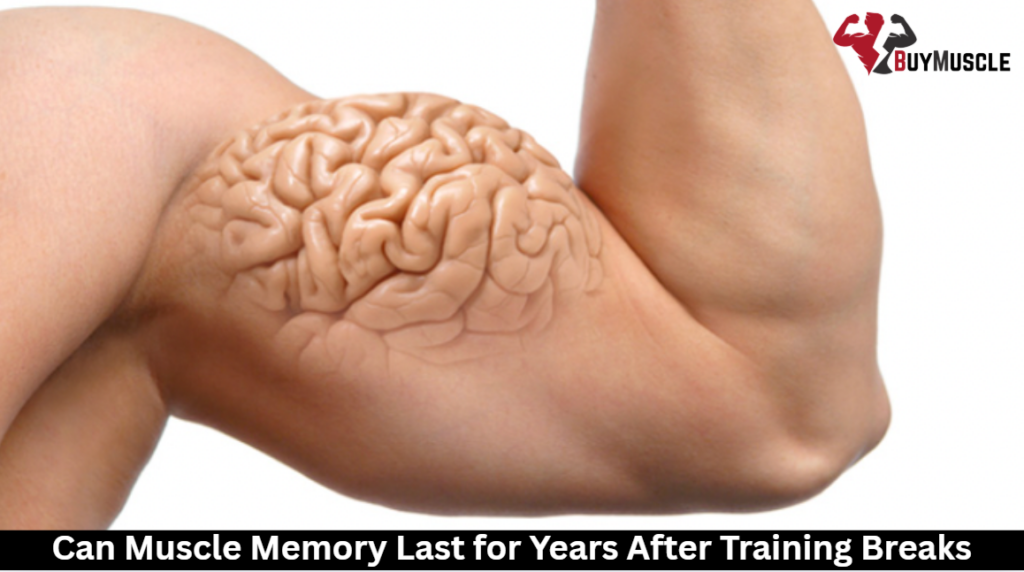
Yes, muscle memory can stay with you for years after you stop training. Even if you don’t work out for a long time, your body keeps the myonuclei (nuclei of muscle cells) and neural pathways that you built up throughout past training. This “blueprint” for your cells helps you get stronger and build muscle faster than someone who is just beginning out.
Even if you lose technical skills more quickly, the body’s ability to regenerate stays the same. It happens all the time with former athletes who come back to their sports and do surprisingly well.
The Neuroscience Behind Muscle Memory
Most people who go to the gym use the word “muscle memory” without thinking about it, but it actually refers to two different physiological processes. The first is neuromuscular adaptation, which means that your nervous system gets better at recruiting muscle fibers and coordinating movement patterns. These skills stay with you even when you’re not training.
The second mechanism has to do with muscle growth since it increases the number of myonuclei. When you do resistance training, your muscles build these “command centers” that never go away completely, even after months or years of not training. These preserved myonuclei are what make it possible for your muscles to grow back after breaks. They speed up protein synthesis when you start training again.
This dual-system method explains why past lifters often rebuild their physiques faster than complete beginners. Your body literally maintains the cellular architecture for future growth.
Athletes Who Returned After Years Away
When you look at real-life instances, the science of muscle memory becomes quite clear. Think about how Michael Jordan came back to basketball after taking a break from baseball. He was able to get back to his high level of play in just a few months, even though he had been away for almost two years.
Flex Wheeler, a bodybuilder, also kept a lot of strength after having a kidney transplant surgery that required him to stop exercising for years. His return showed that long-term adaptation can happen in ways that people didn’t think were conceivable before.
You can see these tendencies in many sports, from gymnasts to powerlifters. Athletes who take long absences and then come back often get back 70–80% of their original ability in 8–12 weeks. Their experiences prove that muscle memory can last for years, especially in people who have trained a lot before.

Muscle Memory vs. Skill Decay
Research differentiates between physiological muscle memory and motor skill retention, indicating they deteriorate at varying rates after the cessation of training. Muscle fiber adaptations endure for prolonged durations owing to the preservation of myonuclei; nevertheless, intricate movement patterns degenerate more rapidly during phases of detraining and muscle atrophy.
Research in muscle memory science indicates that the recovery of strength generally surpasses the restoration of competence. Even after a lot of muscle loss, your body has the molecular blueprint for rebuilding muscle, which speeds up the process when you start training again. But technical movements need neuronal circuits that get weaker if you don’t do them regularly.
Retired athletes often get their bodies back faster than their coordination or skills in a certain sport. What does this mean in real life? When you come back after a long layoff, your strength will come back before your technical skills.
Ways to Get Your Dormant Motor Skills Working Again
To get latent motor abilities back, you need to take a different strategy than just growing muscle mass again. Your neuromuscular system needs tailored stimulation to reconnect those established neural pathways after long absences from training.
Start with workouts that focus on technique and utilize lighter weights, roughly 50–60% of what you were lifting before. It gets movement patterns back to normal without overworking motor skills that you haven’t used in a while. Before each exercise, picture yourself doing it in your mind while paying attention to the cues that tell your muscles to activate.
At first, make things more complicated rather than more intense. After a long hiatus, your muscle memory responds better to good movement than to hard weight exercise. After 2 to 3 weeks of regular practice, these latent pathways usually reactivate, which lets you restore muscle and strength faster than a beginner lifter would.
The Mental Part of Remembering Things Physically
Physical changes are important for muscle memory. However, your mental state has a big effect on how soon you can get back to your old fitness level. When you know you’ve reached particular strength goals before, it gives you a big mental edge when you retrain.
During detraining periods, your brain preserves movement patterns and workout routines even as physical capabilities drop. This procedural memory means that when you come back, you’ll probably do exercises with better form, which lowers the chance of injury and makes the most of your time.
Studies show that this mental part of muscle memory may help explain why it lasts for years in many cases.
Your expectations can affect the results. For example, believing in muscle memory might make you more motivated and consistent when you start training again. This connection between your mind and body provides a positive feedback loop that works with the cellular changes that help you get back to normal.
