







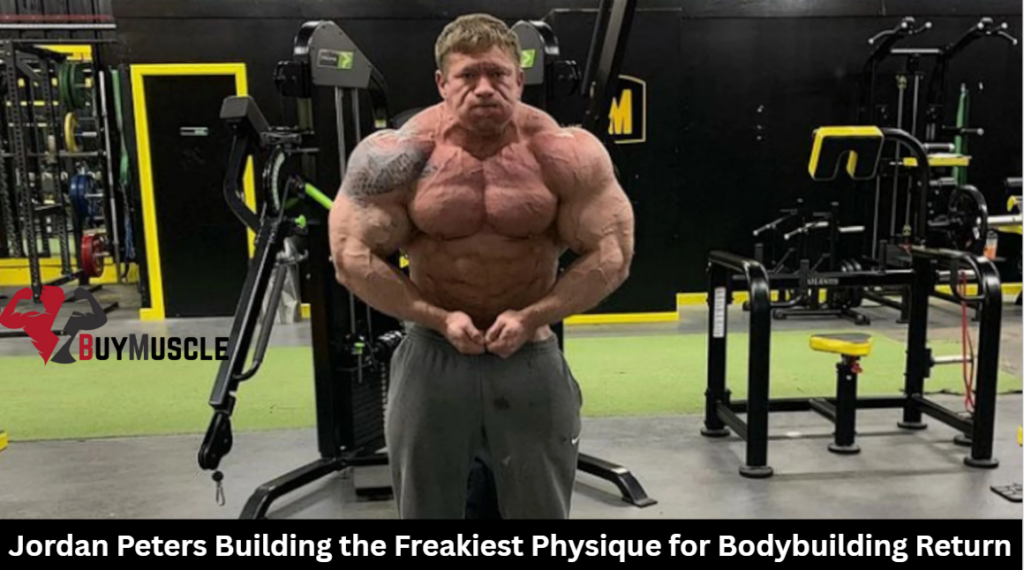
Jordan Peters has changed his body since 2022, adding almost 15 pounds of lean muscle and getting 54-inch shoulders and 21-inch pumped arms. His careful method comprises a planned 6-day training split that focuses on progressive overload, flawless form, and changing up the workouts.
He eats more than 5,000 calories a day, including 2.2 grams of protein for every pound of body weight. His mental discipline includes visualization and mind-muscle connection techniques that set real champions apart from the rest.
Jordan Peters’ Current Physique
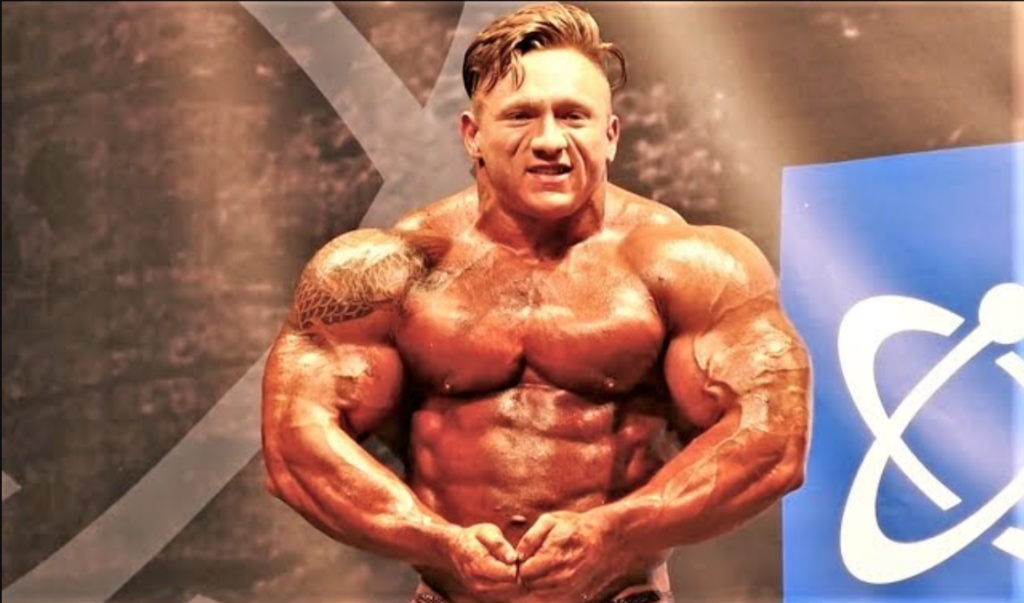
Jordan Peters has changed his body a lot since he started training for competitions again in late 2022. He has gained over 15 pounds of lean muscle while keeping his hallmark conditioning. His biggest gains are that his shoulders are now 54 inches wide, and his arms are now 21 inches around when they are pumped.
Peters’ training methods focus on muscular development through incremental stress, especially in his upper chest and rear deltoids, which had been lagging behind. His bodybuilding comeback has focused on structural balance, which has made his body more symmetrical and aesthetically pleasing. He is 5’7″ tall and weighs 242 pounds in the off-season.
He has gained a lot of bulk while fixing proportional deficiencies that hurt his prior competitive performances. The improvement is clear right away in his better V-taper and quad separation.
Peters’ 6-Day Training Split
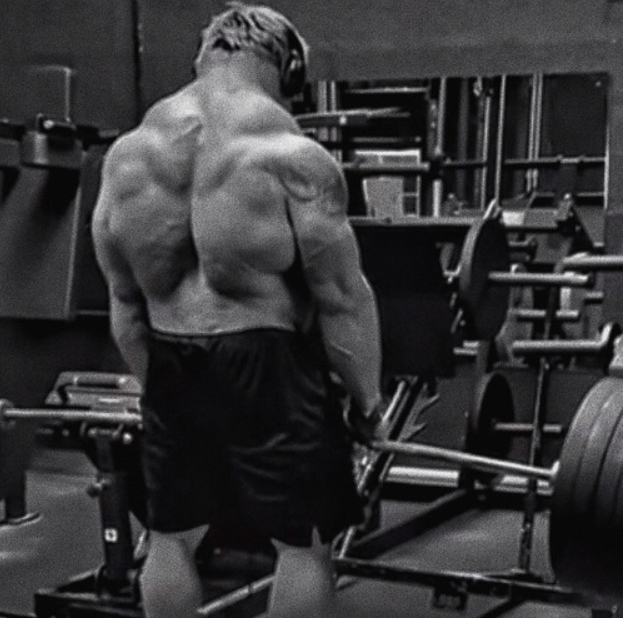
Jordan Peters has created a carefully planned 6-day program that maximizes both volume and recovery, even though many bodybuilders follow traditional training splits. His method relies on progressive overload, meaning he gradually adds more weight while maintaining flawless technique.
Jordan Peters’ training method is all about balancing maximum intensity with planned recuperation through progressive overload and careful organization.
Peters’ split balances powerful compound lifts at the beginning of sessions with targeted isolation workouts at the end of each muscle group. His weekly schedule usually looks like this:
- Day 1: Back and rear deltoids
- Day 2: Delts on the chest and sides
- Day 3: Legs (focus on the quads)
- Day 4: Shoulders and arms
- Day 5: Traps and back width
- Day 6: Legs (concentrate on hamstrings and glutes)
His technique is different because he uses volume training principles, which include both high-intensity sets and smart volume distribution. Peters keeps changing up the workouts he does while keeping the basic movement patterns the same to keep things from getting boring and to encourage new growth.
5,000+ Calorie Diet Plan and Supplementation Protocol
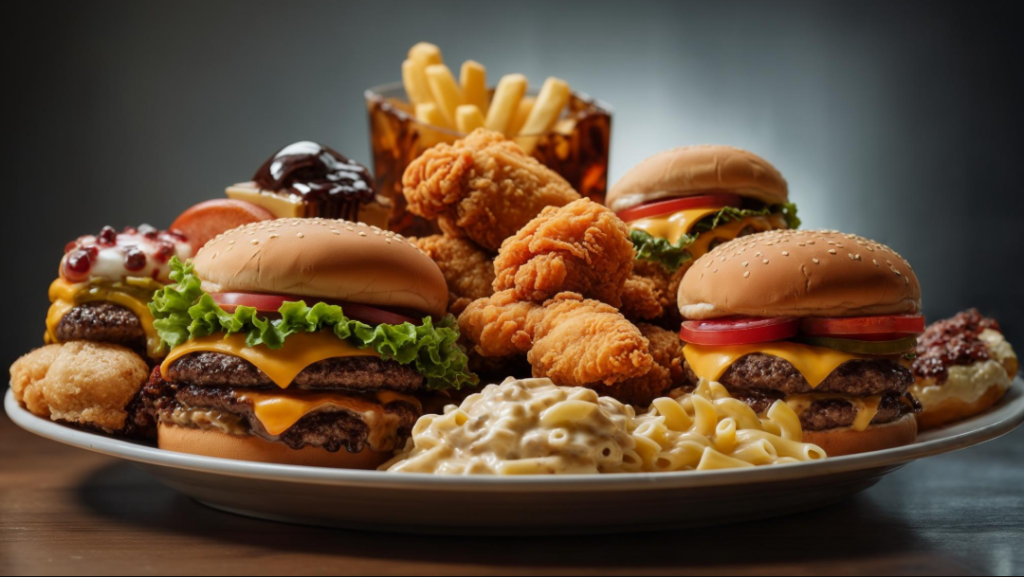
Jordan Peters has a carefully planned 5,000+ calorie diet that is as organized as his workout routine. It is to give him the energy he needs for his huge body and intensive training sessions. His bodybuilding diet puts protein first, with 2.2 grams of protein per pound of body weight. Carbs are timed around workouts to help with performance and recovery.
His diet planning focused on natural foods like lean meats, eggs, rice, and oats, along with whey isolate and carbs that he eats throughout workouts. He uses a food scale for every meal to make sure his macro tracking is accurate to the gram.
He takes caffeine, citrulline malate, and beta-alanine before working out, and he takes casein protein before bed and tailored micronutrient supplements to improve hormonal function and joint health.
Daily Discipline and Visualization Techniques for the Most Growth
Jordan Peters’ bodybuilding goes much beyond just working out. His mental discipline is what let him make such a great recovery. Before each resistance training exercise, he practices visualizing perfect form and maximum muscular engagement.
His approaches for connecting his mind and muscles have changed the way he builds strength, letting him focus on individual muscle fibers even during the hardest sessions. During peak week preparation, Peters uses a targeted meditation plan to lower his cortisol levels and improve his conditioning when it matters most.
Peters is different from his competitors not only because of his genetic talent, but also because he is always working on his mental strength. He keeps a meticulous logbook of both his mental and physical growth, which shows that he believes that 80% of bodybuilding success is mental.
How Peters Compares to the Best Bodybuilders of Today
When you compare Peters’ body to those of other professional athletes, you can see where he has an edge in some areas and where he still has to improve. Peters has more muscular density and feathery detail than mass monsters like Big Ramy or Nick Walker, especially in his back and arm separation.
Peters doesn’t have the same width as the current Mr. Olympia candidates, but he makes up for it with his very massive chest and delts. His leg growth, notably the definition of his hamstrings and quads, is on par with Chris Bumstead’s classic proportions, but he has a lot more muscle.
Peters stands out because he is always in good shape.
Unlike his competitors, who have trouble keeping their hardness at its highest level during the shows, he is known for bringing a granite-like quality that lasts from the start to the end.
